
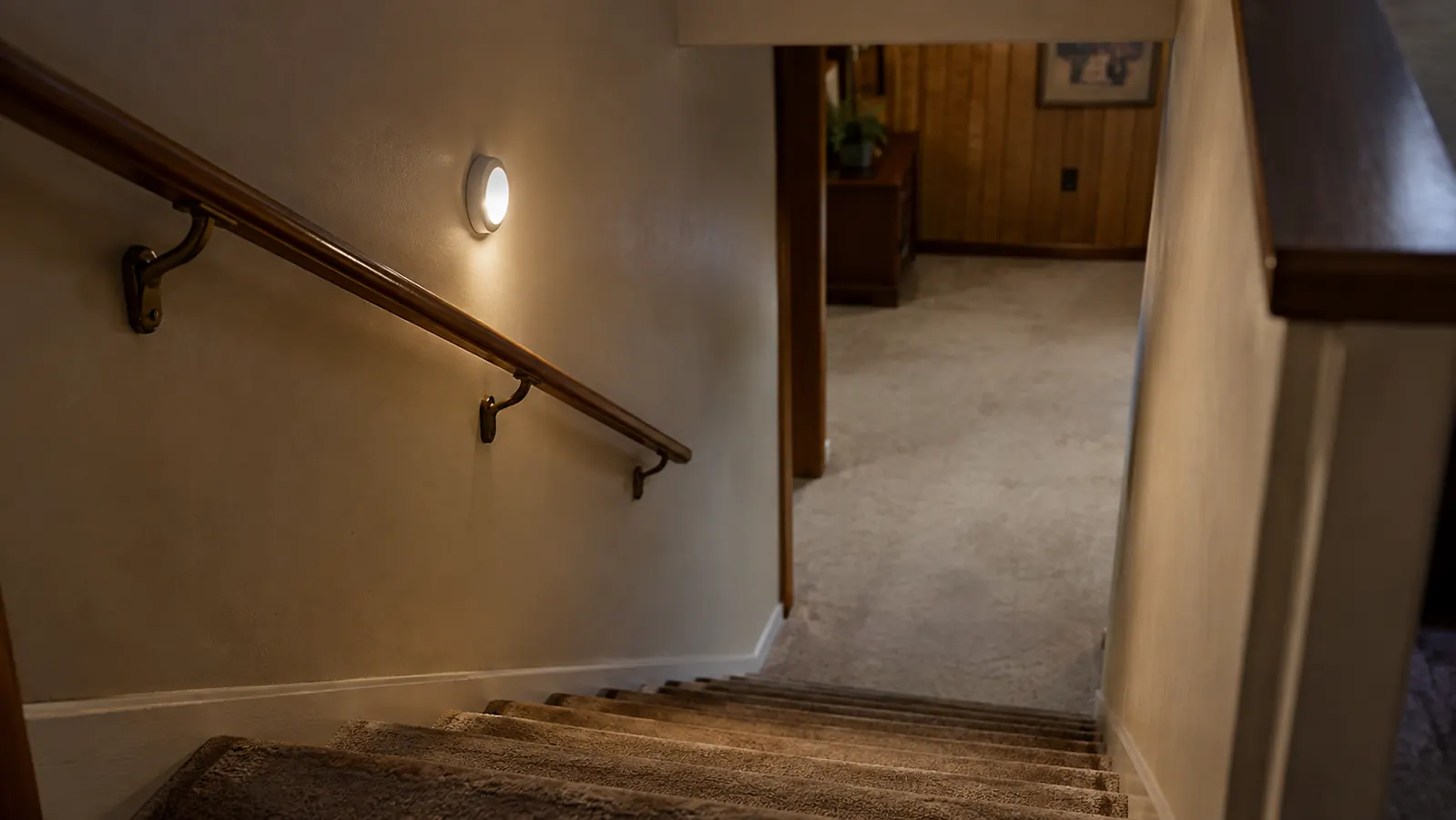
I have changed the batteries in my basement stairwell light four times in the past year. Four times. Nobody mentions the batteries when they talk about motion sensor puck lights, and it is the first thing you should know before you buy a set. The STAR-SPANGLED 2.8 inch LED motion sensor lights do exactly what they promise. They light up when you walk past, they go off when you leave, and they have survived a year of my house without a single failure. But they run on AAA batteries, and a motion sensor light is never truly off. That is the part of the listing nobody writes down.
I bought the three pack last fall, mostly for the basement stairs. Our 1972 split level has a light switch at the bottom of the stairs and nothing at the top, which means somebody is always walking down into the dark and then walking back up into the dark. I also put one light in the storage closet under the stairs and one in the supply closet in my craft room. A year later, all three still work. That is not nothing. But I have opinions about the batteries, the adhesive, and the motion sensor, and this is the review I wish I had read before I bought them.
The Quick Verdict
A dependable, genuinely useful light for stairs, closets, and landings. The motion sensor works, the adhesive mostly holds, and the brightness is right for a utility light. The real cost is batteries, and you will be buying them. That is the honest trade, and for a three pack, it is a fair one.
Amazon Check Today's Price →Three puck lights, one year, four battery changes, zero failures
The STAR-SPANGLED 3-pack has lit my basement stairs, the storage closet, and the craft room supply closet for a full year. All three still work. Check today's price on Amazon.
Amazon Check Today's Price on Amazon →How I've Used It
I should start with the room, because the room is why I bought these. Our finished basement rec room has exactly two small windows, so every usable light down there is one I added myself. The stairs are the worst part. The switch is at the bottom, so you walk down into the dark and fumble along the wall. I wanted something that would light the stairs without me having to remember to flip a switch on the way down.
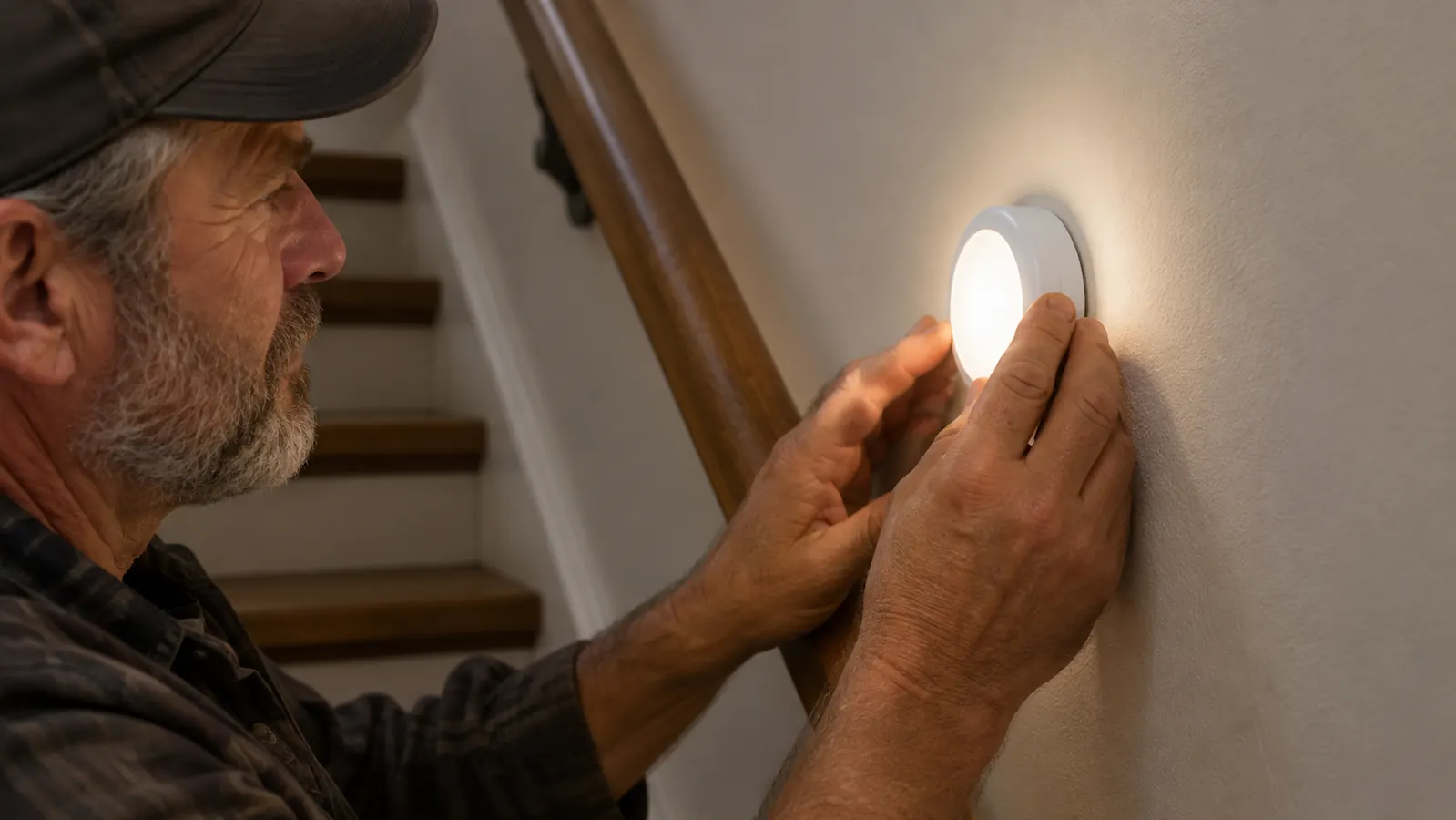
The stairwell light went on the wall at the top of the stairs, about chest height. The second went inside the storage closet under the stairs, and the third went in the supply closet in my craft room, where I keep the die-cutting supplies. Installation took about two minutes per light. You peel the backing off the adhesive pad, press the light against the wall, and hold it there for a few seconds. No screws, no wiring, no holes. I did all three in one evening.
I will be honest about my expectations. I have bought the cheap version of this idea before, and the cheap version was a disappointment. The sensor ignored me half the time, the light was dim enough to be useless, and the adhesive gave up within a month. So when the STAR-SPANGLED lights arrived, I did not expect much. Gary was skeptical too. He grew up in a house where you flipped a switch and a light came on, and he did not see the point of a light that needed batteries and a sensor. Then he came up from the basement one night carrying two folding chairs, the light caught him at the top of the stairs, and he did not have to put the chairs down to find the switch. He has not mentioned the batteries since. A year later, I am writing this review because they earned one.
What Nobody Tells You About the Batteries
Here is the thing nobody tells you about a motion sensor light. It is never really off. The sensor has to be listening all the time, and listening takes power. So the batteries drain even when the light is not on. The package does not say this. The listing does not say this. You find it out in February, when the stairwell light goes dim on you with your arms full of laundry. The first time it happened, I thought the light was broken. It was not. The batteries were just tired.
In my house, the stairwell light gets the most traffic, and it has needed fresh AAA batteries about every two months. The closet lights run less, so they stretch to four or five months. The craft room closet light, which I open a few times a week, sits between the two in pace. That works out to a small handful of battery changes a year across the three lights. A twelve pack of AAAs covers it, and I keep one in the utility drawer. It is not a fortune, but it is a recurring chore, and it is the honest cost of a light you never had to wire.
There is no warning light and no battery indicator. The light just gets a little dimmer for a few days, and then it quits. You will find out when you need it most. The dim stage lasts a few days, so there is a window, but the window is easy to miss when you are not looking for it. I have learned to change the stairwell batteries on a schedule instead of waiting for the dim, and that has saved me a few dark trips down the stairs.
If the idea of buying batteries every couple of months bothers you, this is not the light for you. There are rechargeable puck lights with built in batteries, and they are a different product with a different price. The STAR-SPANGLED version runs on AAAs because it is simple, cheap, and dependable. You just have to feed it.
The Motion Sensor: Mostly Smart, Occasionally Dense
The motion sensor is the reason I bought these, so I paid attention to how it actually behaves. The stairwell light catches me from about halfway down the stairs, which is far enough. It lights the steps before I need them, and it goes off about twenty seconds after I stop moving. That delay is long enough to get through the doorway at the bottom and short enough that I am not wasting batteries.
But it has quirks. If I stand very still at the top of the stairs, it goes dark on me. The sensor is looking for movement, not for a person, and it does not know the difference between a person standing still and an empty stairwell. I have learned to wave an arm when the light clicks off while I am carrying something. It is a small thing, but it is the kind of thing you only learn by living with the light.
The closet lights behave the same way. Open the door, the light comes on. Close the door and stand still, it goes off in about twenty seconds. For closets, that is perfect. For a room where you want steady light, it is not. These are utility lights, not room lights, and the sooner you know that, the happier you will be with them.
The closet light has a different trick. It sits on the wall above the door frame, and it catches me the moment the door opens. But it does not see into the corners of the closet, so if I am reaching deep for a box on the top shelf, the light goes off on me. I have learned to reach with one hand and wave the other.
The Adhesive: What a Year Does to a Sticky Pad
The adhesive is the second thing nobody tells you about. The pads on the back are strong, and they hold beautifully on smooth painted walls. The stairwell light has been on the same spot for a year and has not moved a millimeter. I checked it again before writing this review, and it is still exactly where I put it. That is the good news.
The less good news is that the pads are one shot. If you peel the light off the wall to move it, the pad is done. You will need a new pad, and the lights do not come with spares. Textured walls are also a problem. I tried one on the painted paneling in the rec room, and it held for about three weeks before it let go. The fallen one did not break. The light itself is sturdy, which I appreciated when I picked it up off the floor. Smooth surfaces, fine. Texture, not fine.
The craft room supply closet is paneled, so I ended up using a small command strip I had in the drawer, and that has held fine ever since. That is not a mark against the STAR-SPANGLED lights, exactly. It is just the truth about how adhesive pads behave, and I would rather tell you than have you find out with a light on the floor.
How Bright Is It, Really?
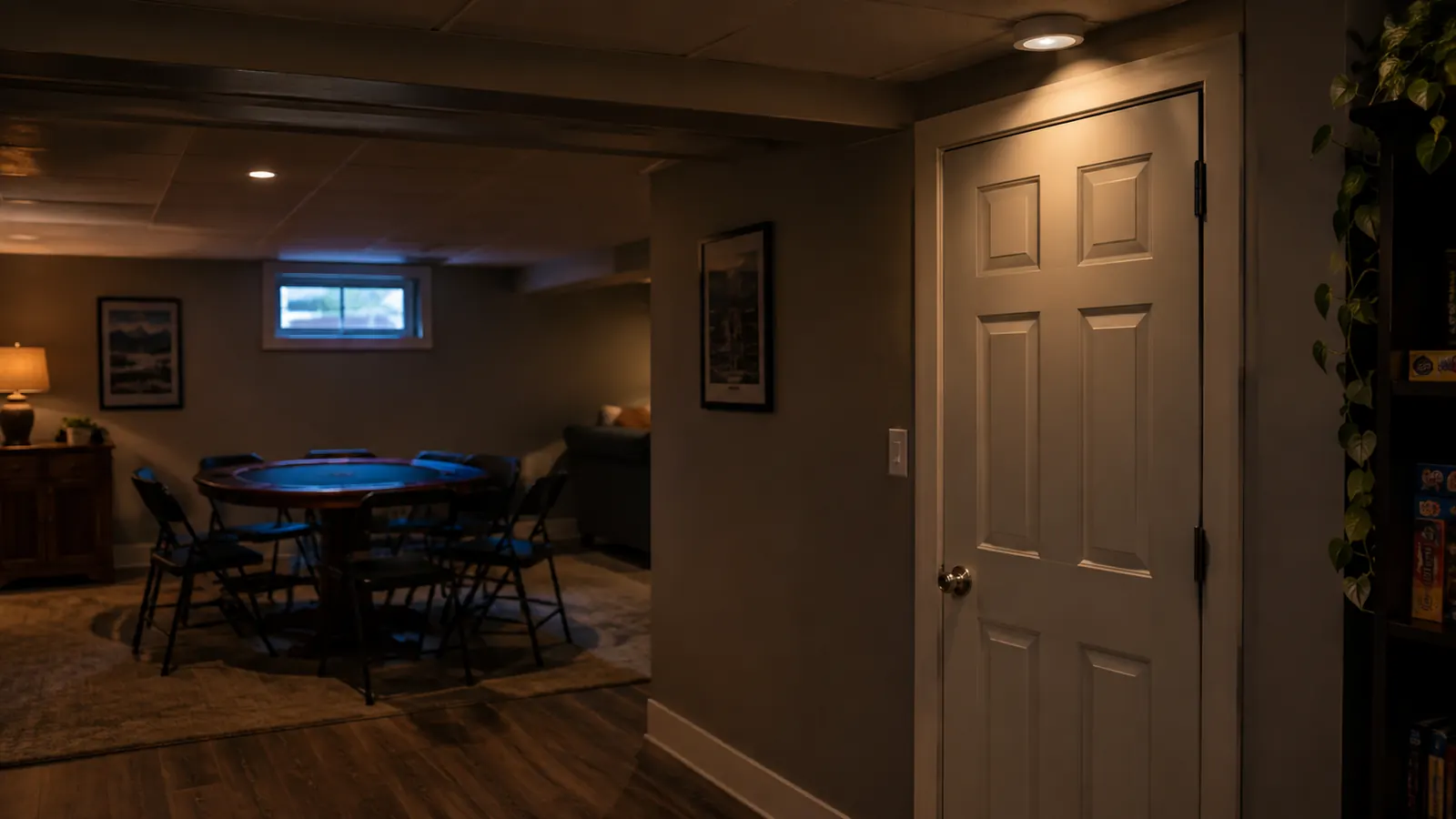
Let me be concrete about brightness, because it is the question everybody actually asks. The stairwell light is bright enough to see every step clearly from the top to the bottom. It is bright enough to find a specific box in the storage closet. It is bright enough to read the labels on my die-cutting supplies. It is not bright enough to read a book by, and it is not bright enough to light a room.
That is the honest tradeoff of a battery powered LED puck. It throws a clean, even light that is perfect for a stairwell, a closet, a landing, or a hallway. It is not a replacement for an overhead light, and if you buy it expecting that, you will be disappointed. Buy it for the places where you just need to see where you are going, and it will do that job well. I use the craft room light most days, and I have never once wished it were brighter for the job it does. I have also never once mistaken it for a lamp.
The sensor also means the light is only working when you are there. That is the point, and it is why the batteries last as long as they do. A light that runs for a minute at a time can stretch a set of batteries for months. The stairwell light runs more than the others, and that is why it eats batteries faster. The behavior all makes sense once you live with it. I have also learned to trust the dim. When the stairwell light starts looking tired, I change the batteries that weekend, and it is back to full strength.
The Tradeoffs Nobody Puts in the Listing
I want to be fair, so here is the full list of what I would tell a friend. The batteries are a recurring cost and a recurring chore. The adhesive is excellent on smooth walls and unreliable on texture. The sensor needs movement, so standing still in front of it means standing in the dark. There is no battery indicator, so the light will quit on you at some point. None of these are deal breakers on their own. They are just the things I wish someone had told me, so I could decide with my eyes open.
And yet, a year in, all three lights still work. The stairwell light has been changed four times, the closet lights twice each, and none of them has failed. On game nights, when we have eight or ten people over, the stairwell light is the difference between guests fumbling up the stairs and guests leaving with their dignity intact. For about two minutes of installation and a handful of battery changes a year, I get stairs that light themselves, a storage closet I can actually see into, and a craft supply closet that does not require a flashlight.
For what a three pack costs, that is a fair trade. I would buy them again, and I have already recommended them to my sister in law for her hallway. But I would tell her the same thing I am telling you. Buy a twelve pack of AAAs at the same time, and you will not be annoyed later.
What I Liked
- No wiring, no screws, no holes. Installation is peel, press, hold, done.
- The motion sensor is genuinely reliable and lights the stairs before I need them.
- Bright enough for stairs, closets, and landings without being blinding.
- Three lights in the pack, so you can cover several spots at once.
- A year in, all three of mine still work without a single failure.
Where It Falls Short
- Batteries are a recurring cost, and the sensor drains them even when the light is off.
- No battery indicator. The light just gets dim and then quits.
- The adhesive pads are one shot and struggle with textured walls.
- Standing still in front of the sensor means standing in the dark.
- Not bright enough to be a room light, only a utility light.
The stairwell light has needed fresh batteries four times this year. The closet lights, twice. That is the honest cost of a light you never had to wire.
Who This Is For
Buy these if you are a renter who cannot drill holes in the wall. Buy them if you have a stairwell with a switch at the wrong end, a dark closet, a hallway that needs a night light, or a landing that is a trip hazard in the dark. Buy them if you already keep AAAs in the house and do not mind a battery change every couple of months. In October, I put one in the entry hall so I was not running to the porch light every time a group of trick-or-treaters came up the walk.
They also make a thoughtful gift for the right person. A college student in a dorm, a grandkid with a dark hallway to the bathroom, a relative who gets up at night and would benefit from stairs that light themselves. If you gift them, include a pack of AAAs. The person will thank you later, and it is the kind of honest touch that makes a gift actually useful.
Who Should Skip It
Skip these if you want a light you never have to think about. If the idea of changing batteries every couple of months annoys you, buy a wired light or a rechargeable model and pay the difference. Skip them if you need to light a whole room, because these are utility lights, not room lights. And skip them if your walls are heavily textured, unless you are willing to supply your own mounting tape.
I say this as someone who has kept three of them running for a full year. They are good at what they are. They are just not everything. Know what you are buying, and you will be as satisfied as I am. And if you are buying these as a gift, think about whether the person will mind the batteries. Some people will. My sister in law does not, and she is happy with hers. My neighbor would, and I would not give them to her.
The honest verdict: three lights, one year, still working
The STAR-SPANGLED 3-pack has earned its place in my basement. The batteries are the real cost, and now you know exactly what that looks like. Check today's price on Amazon.
Amazon Check Today's Price on Amazon →