
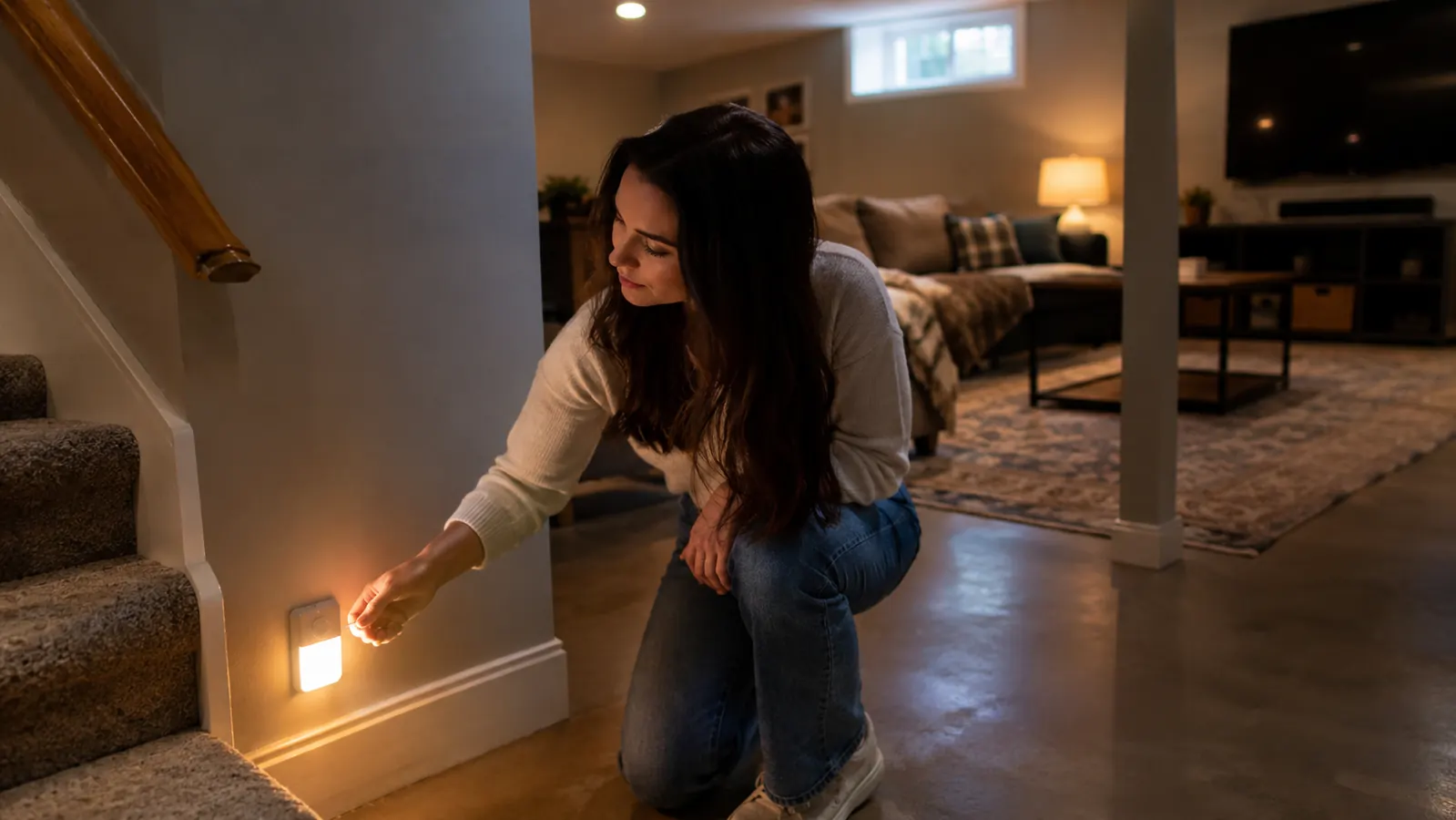
Every dark corner in my house has a story, and most of them start with me buying the cheap version first. The basement stairwell in my 1972 split-level is the worst one. It has two small windows at the far end of the rec room, and the stairs down are a black hole until you get to the bottom. I tried a plug-in night light at the top, then a battery bar that fell off twice, then I finally put a STAR-SPANGLED motion sensor puck light at the bottom of the steps where the wall turns. It has been there for a year now, and it still fires every single time my husband Gary starts down with an armload of game night snacks.
The question I kept asking myself before I bought it was the same one most people ask: does a cheap motion light hold up, or do I need to spend Mr Beams money to get something that lasts? After a year of running both side by side, the honest answer is that they hold up differently. The STAR-SPANGLED three-pack is the better buy for tight indoor spots like closets, cabinets, and stairwells. Mr Beams is the better buy when you need real brightness, a wider sensor range, and fewer battery changes. I would not call either one a waste of money, and I would not call either one perfect. I am not a lighting designer and I do not own a light meter. I am a person with a dark basement who has bought both, lived with both, and replaced batteries in both.
| STAR-SPANGLED Puck Lights | Mr Beams | |
|---|---|---|
| Cost for multiple spots | Three lights in one pack, priced well below what a single premium unit runs | One light per box, premium price |
| Brightness | Fine for a stairwell or closet, not a room light | Bright enough to light a whole garage bay |
| Battery life | AAA batteries, changed every couple of months in heavy use | Larger batteries, changed a couple of times a year |
| Sensor range | Short range, fires when you are close, good for tight spaces | Catches movement from across the room |
| Size | Small 2.8 inch puck, fits under shelves and inside cabinets | Bulkier unit, needs a flat open spot |
| Mounting | Adhesive backing, stayed stuck through a humid Iowa summer | Adhesive backing, stayed stuck just as well |
| Where it belongs | Indoor closets, cabinets, stairwells, under shelves | Garages, workshops, covered outdoor spots |
How I Compared Them
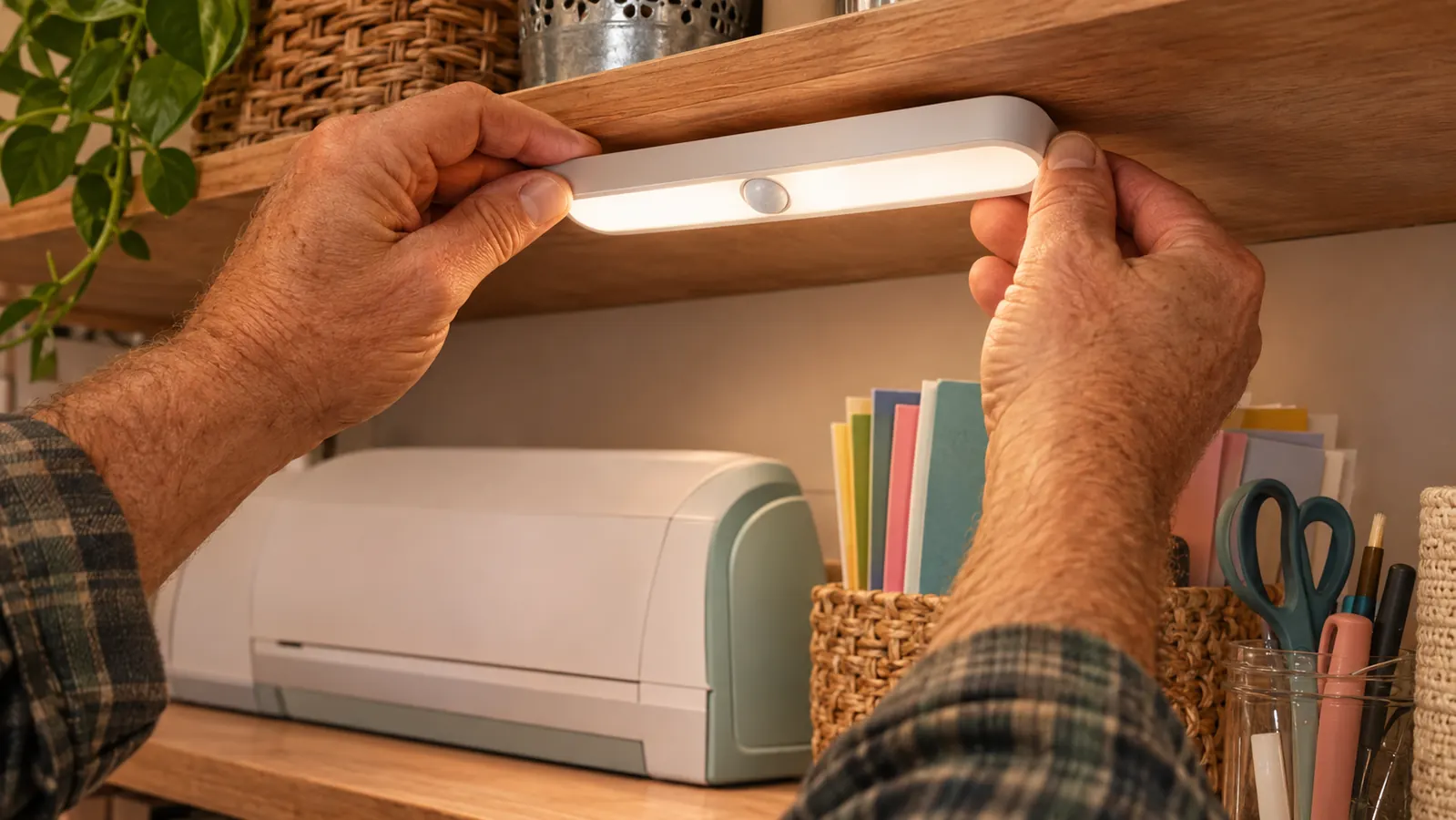
I did not set out to run a formal test. I set out to fix the dark spots, and the comparison happened by accident. The STAR-SPANGLED three-pack went in first: one at the bottom of the basement stairs, one inside the craft room closet where my die-cutting supplies live, and one under the shelf in the rec room where I keep the snack bowls for game night. The Mr Beams units were already in the house. One has been on the covered back deck next to the door for years, and the other lives in the garage near the workbench.
Over the following twelve months I kept a rough mental log of three things: whether the light came on when it should, whether it came on when it should not, and how often I had to change batteries. I also paid attention to brightness, because a light that turns on but does not help you see is just a nightlight with opinions. I checked the adhesive on every unit after the first freeze and again after the first stretch of 90 degree days.
I also tested the one thing that usually kills cheap lights: the adhesive. Both brands use a peel-and-stick backing, and both survived a full Iowa year, including the week in January when the basement stairwell light was the only light on that wall and the week in July when the craft room hit 85 degrees. Neither unit fell. I did learn to wipe the wall with rubbing alcohol first, because the first STAR-SPANGLED light I stuck to a dusty wall came down in a month. That was my fault, not the light's.
What Nobody Tells You About Battery-Powered Motion Lights
The first thing nobody tells you is that these lights are always listening. A motion sensor light draws a tiny amount of power even when it is off, because it has to watch for movement. That is why the battery questions matter more than the light questions. Two identical lights can have wildly different battery lives depending on where you put them. Put one in a hallway that people walk through all day and it will eat batteries. Put one in a closet that gets opened twice a week and the same light will run for months. My stairwell light is the hallway version. It fires a dozen times a day, so it gets changed the most.
For brightness I did not use a meter. I used the same test I use for everything in this house: can I read the label on a can of tomatoes from the pantry shelf, and can I see the last step clearly with an armload of snacks. The STAR-SPANGLED light passes the step test and fails the tomato label test past about four feet. The Mr Beams light passes both. That is the whole difference in one paragraph.
The second thing is that brightness and range are not the same as quality. A light with a huge sensor range is annoying in a small space, because it fires every time someone walks past the door. A light with a short range is useless in a garage. That is why the comparison between STAR-SPANGLED and Mr Beams is not really about which brand is better. It is about matching the light to the spot. I have both brands in my house right now, and I would not swap them. The STAR-SPANGLED lights are in the spots where short range is a feature. The Mr Beams lights are in the spots where range is the whole point.
Where STAR-SPANGLED Wins
The biggest win for the STAR-SPANGLED lights is the price per dark corner. At today's prices, the three-pack costs about what a single Mr Beams unit runs, and I used all three within an hour of opening the box. The stairwell light alone was worth it. The bottom of my basement steps is a genuine hazard when someone is carrying a crockpot, and that little puck makes the last three steps obvious without flooding the whole room. The craft room closet got the second one, and the under-shelf spot in the rec room got the third. For the cost of one premium light, I covered three places that actually needed covering.
The size is the other quiet advantage. The STAR-SPANGLED unit is small enough to disappear under a shelf or inside a cabinet, and the white housing blends into trim and door frames. Mr Beams units are not huge, but they are visibly there. In a closet or a cabinet, that footprint difference matters. The short sensor range also works in your favor in tight spaces. The stairwell light does not fire every time someone walks through the rec room ten feet away. It waits until you are actually on the steps, which means the batteries are not being wasted on ghosts.
Where Mr Beams Wins
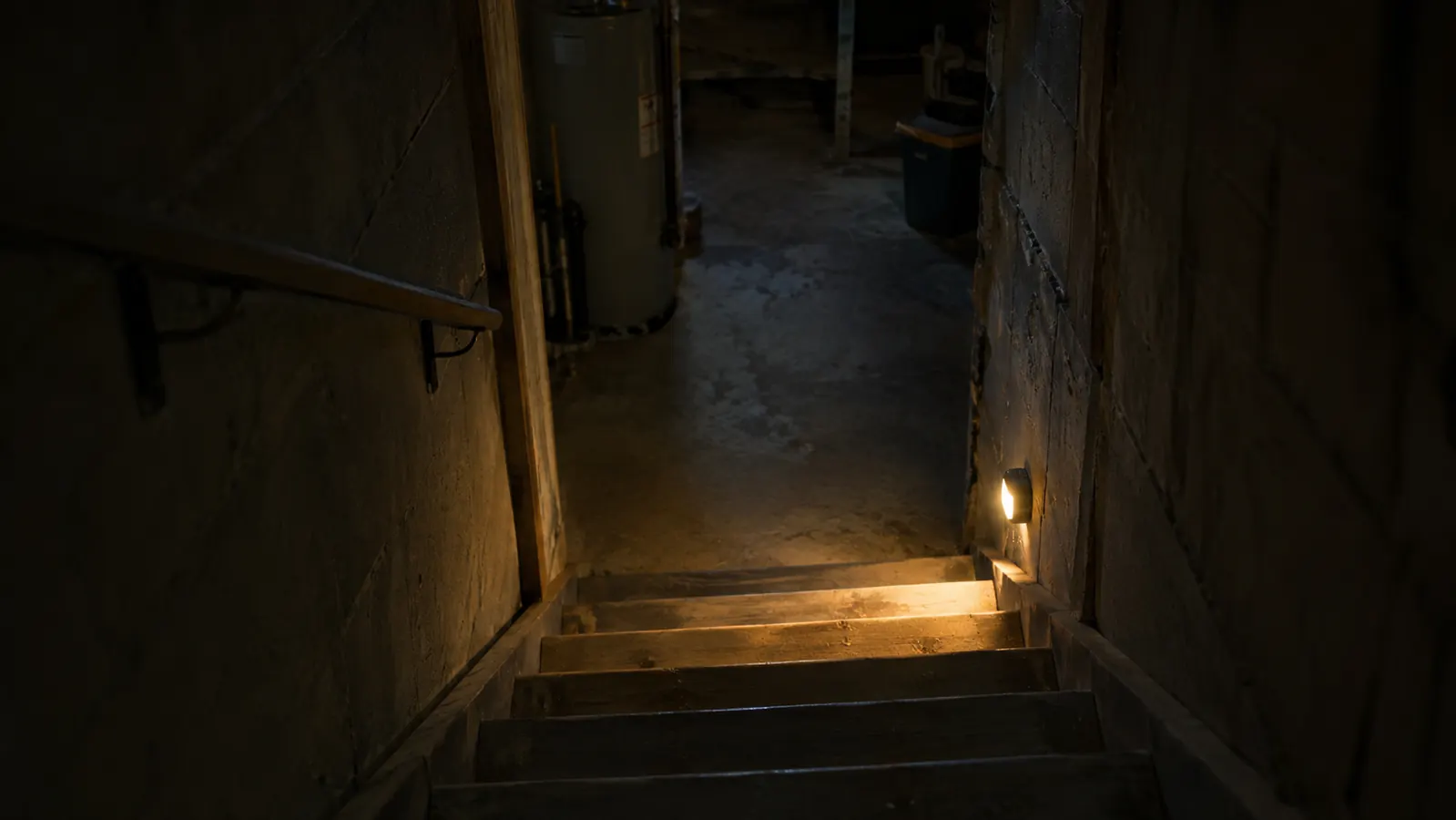
I have to give Mr Beams the brightness argument without hedging. The one in the garage lights the whole workbench area, and the one by the deck door throws a pool of light across the whole landing. The STAR-SPANGLED lights are task lights. They show you the steps or the shelf, and they do that well, but you would not want one as the only light in a room where you are trying to find something on the floor. If the job is 'light up a space where people are doing things,' Mr Beams wins and it is not close.
Mr Beams also wins the battery argument, and that is really the durability question the title of this article is asking. The garage unit went through batteries twice in twelve months. The stairwell STAR-SPANGLED went through batteries five times, because it fires every time someone uses the stairs, which in my house is constantly. The AAA batteries are cheap and easy to find, so it never felt like a crisis, but it is a real ongoing cost and a real annoyance. I also noticed the Mr Beams light does not dim as the batteries drain. It just stops. The STAR-SPANGLED light fades noticeably for a week before it gives up, which is actually a useful warning, but it means the last week of battery life is not full brightness. The Mr Beams units also have a wider sensor range, so they catch you from across the room, and they are built to handle a covered outdoor spot. The STAR-SPANGLED lights are indoor lights, full stop. I would not trust one on a deck through an Iowa winter.
Three dark corners for about the price of one premium light
The STAR-SPANGLED three-pack covered my stairwell, the craft room closet, and the rec room shelf, and all three still fire a year later. If you have a dark spot that needs a cheap fix, check today's price.
Amazon Check Today's Price on Amazon →Who Should Buy Which
Buy the STAR-SPANGLED three-pack if your problem spots are small and indoors. A basement stairwell, a coat closet, a pantry, the cabinet under the sink, the shelf above the die-cutting table. If you have several of those spots and you do not want to spend premium money on each one, the three-pack is the obvious answer. It is also the better gift for a grandkid's bedroom or a rental where you do not want to leave expensive fixtures behind. The lights are simple, the adhesive does not damage paint, and they run on batteries anyone can replace.
Buy Mr Beams if your problem spot is a room, not a corner. A garage, a workshop, a laundry room, a covered porch. If you need to see what is on the floor from the doorway, or you want the light to catch movement before you are standing on top of it, the extra money buys real capability. Mr Beams is also the safer choice if you want a brand with a long track record. STAR-SPANGLED has been solid for me, but Mr Beams has been selling these things for years and the units I have are proof the design holds up.
One more thing on the gift question, because I know half the people reading this are buying for someone else. The STAR-SPANGLED three-pack is an easy gift for a kid's room, a dorm, or a rental. It is useful, it is not expensive, and it does not require an electrician. Mr Beams is the gift for the person who already owns a garage. If you are buying for my husband Gary, who will never admit he cannot see the workbench, you buy the bright one. If you are buying for my granddaughter Nell's bedroom, you buy the three-pack and let her pick the corners.
The Bottom Line
After a year, both brands still work. That is the part that surprised me, because I expected the cheaper lights to die first. They did not. What the STAR-SPANGLED lights cost you is battery changes and brightness, not lifespan. What Mr Beams costs you is money up front. For my house, with its two-window basement and its game nights and its craft room closet, the three-pack was the better buy. I got three working lights instead of one, and a year later I would make the same choice. If your dark spots are rooms instead of corners, spend the money on Mr Beams. If they are corners, start with the three-pack and see how many places you can fix for the price of one.
One honest caveat: I cannot tell you what these lights look like in five years, because I have only had them for one. What I can tell you is that the STAR-SPANGLED units show no signs of dimming, the sensors still fire as fast as they did on day one, and the adhesive has not let go anywhere. That is more than I expected from a three-pack at this price point, and it is the reason I am comfortable recommending them for the tight indoor spots. If I had to guess, I would say the units will outlive my patience with changing batteries, which is the real measure of a battery light.
Start with one three-pack and light the worst corner first
The stairwell light alone was worth the cost of the pack. If you have a corner that has been dark for years, this is the cheapest fix I found. See today's price on Amazon.
Amazon Check Today's Price on Amazon →